



As a Danish fast fashion brand that entered the Chinese market in 1996, ONLY once became a wardrobe staple for a generation of young people thanks to its early layout both online and offline. However, with the rise of the Generation Z consumer group, the speed of fast fashion clothing turnover has accelerated, and consumers are faced with more brand choices.
The well-established fast-fashion women's clothing brand ONLY, representing more than 20 years, inevitably faces issues of brand aging and declining market share.
In this context, ONLY decided to actively seek change and enthusiastically embrace the new strategies of fast fashion brands.In 2021, deeply collaborated with Zhiyi Technology to reshape brand competitiveness through a data-driven product selection strategyThis article will analyze how ONLY leverages big data to empower and reconstruct a brand-new product selection methodology.
01 Trend Positioning: Capturing Market Direction Driven by Data
Established clothing brands have considerable 'inertia' in product selection—they used to rely heavily on designers' experience and feedback from online and offline stores to choose products. However, this model has a long cycle and poor stability, and has gradually become ineffective in the fast-paced e-commerce era.
Under the pace of major emerging internet celebrity fast-fashion brands launching 100 new items every month, the first step for brands unwilling to fall behind is to keep up with or even surpass their new product launch pace, demonstrating the advantage of a 'veteran strong player' in product development capabilities.
But when facing the ever-changing demands of the younger generation of consumers, how can we 'quickly, accurately, and ruthlessly' develop new products?
ZhiYi provided ONLY with a 'fast track' to quickly surpass its competitors through the aggregation and insights of global fashion data.
First, with the help ofThe 'Category Insights' feature of 'Industry Insights', Zhiyi provided ONLY with data on the distribution of new women's clothing products within recent target periods (such as past Q3 quarters). By referring to the distribution of new product categories in the same period of previous years, it helps the merchandise planning department make an initial plan for the allocation of new product categories.
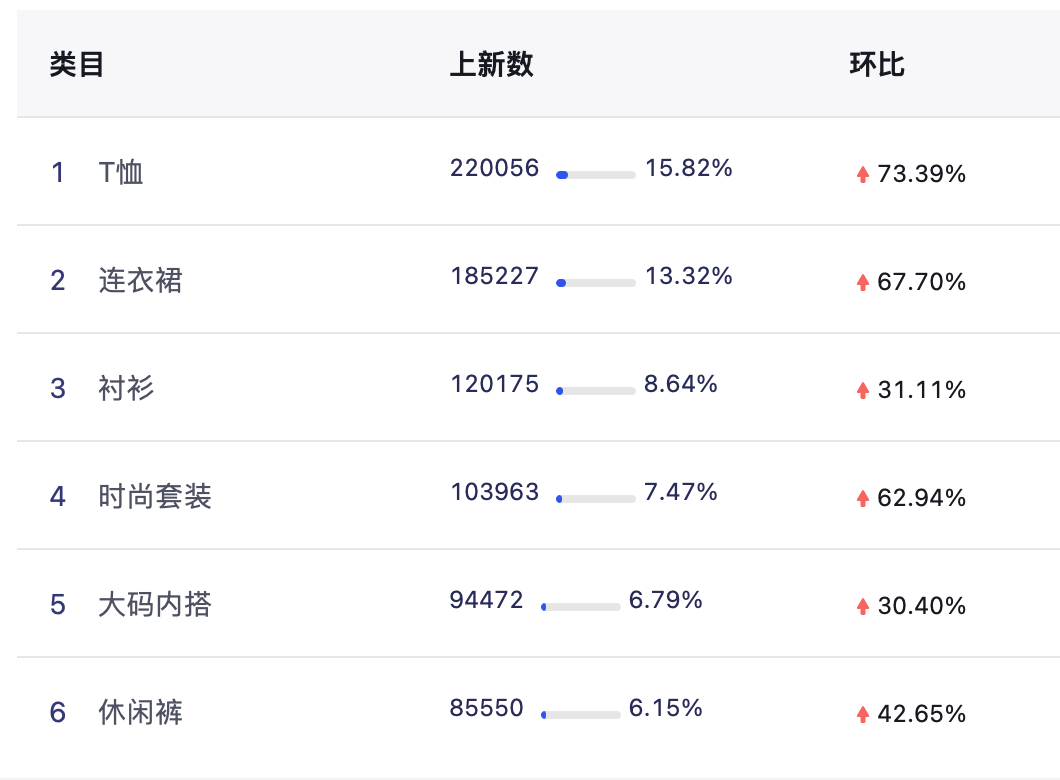
In addition, it can also be represented through e-commerce and DouyinAnalysis of popular terms and search keywords on social media platforms to dynamically grasp the real-time demands of consumers on e-commerce platforms. For example, in the third quarter of 2024, Zhiyi captured the decline in popularity of 'dopamine dressing' and the surge in search volume for the keyword 'quiet luxury style.' ONLY can use this as a key reference for designing the color scheme of the 2025 Spring/Summer new products, adjust the theme for Spring/Summer 2025, and accurately grasp the latest market trends.

In addition to data insights, Zhiyi also provides professional market trend interpretation reports, relying on fashion big data to offer more professional, intuitive trend analysis and forward-looking predictions.
ONLY's methodology for creating popular products is first derived from macro insights into the consumer market and data research.
02 Detailed Design: Closed-Loop Optimization from Data to Product
A macro understanding of the category market is only the starting point for a hit product. To grasp the 'picky hearts' of young consumers, one must start from the details of each clothing design and identify the true preferences and needs of the consumers.
But for ONLY, in order to more accurately meet dynamic consumer demand, it is inevitably necessary to develop more SKUs, which tests both the supply chain capability and the accuracy of product selection and launch, as well as the rate of hit products; otherwise, it may lead to the risk of inventory backlog.
However, when facing such problems, ONLY can also use clothing big data to develop a new model for precise research and product development.
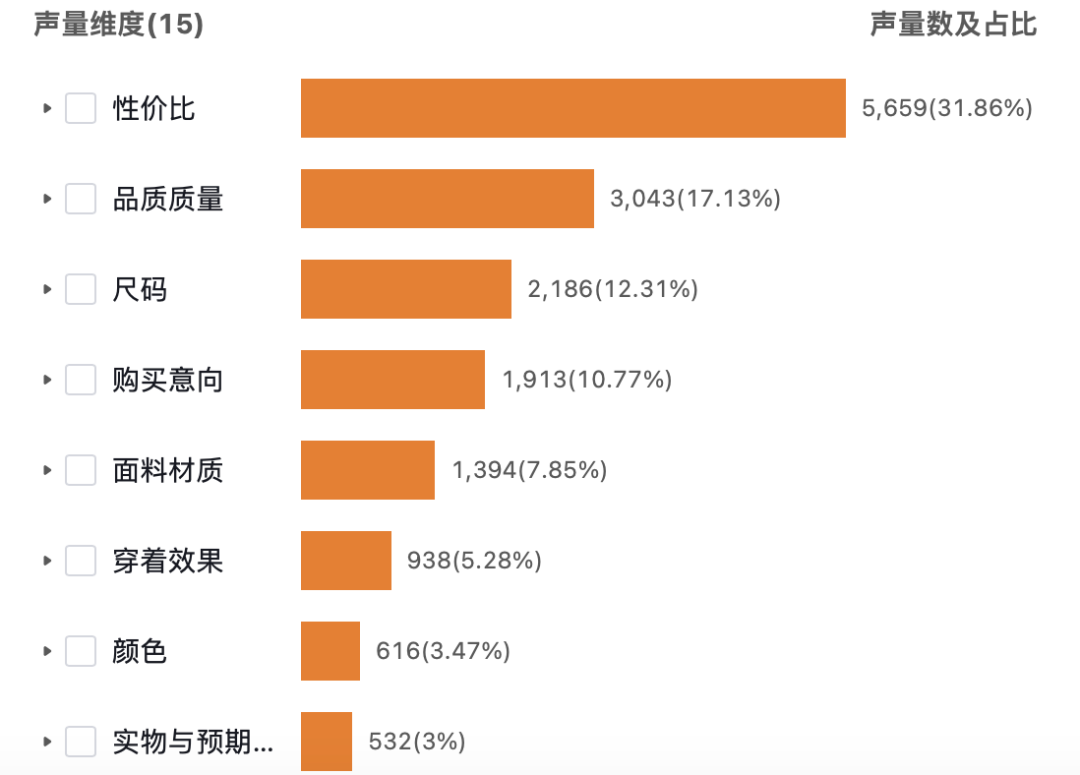
For example, in the selection of fabrics for women's tops in summer, with the help of Zhiyi's review analysis module, we aggregated and analyzed the top 100 products at the top of the same category list and found that 'breathability' and 'wrinkle resistance' became high-frequency keywords in 1-2 star reviews.
Regarding negative feedback on popular products, brands can quickly gain inspiration and ideas for redesigns, adjust the proportion of polyester fiber, and introduce a cool-feeling Tencel-cotton blended fabric, thereby gaining consumer approval.
Similarly,Through the 'Attribute Insights' feature, brands can define target subcategories.For example, for women's T-shirts, select products from the best-selling list and conduct separate research on attributes such as sleeve length, neckline, style, patterns, and fabric. Understand which design elements or craftsmanship are more popular in similar best-selling products in the market and align with the general public's aesthetic preferences.
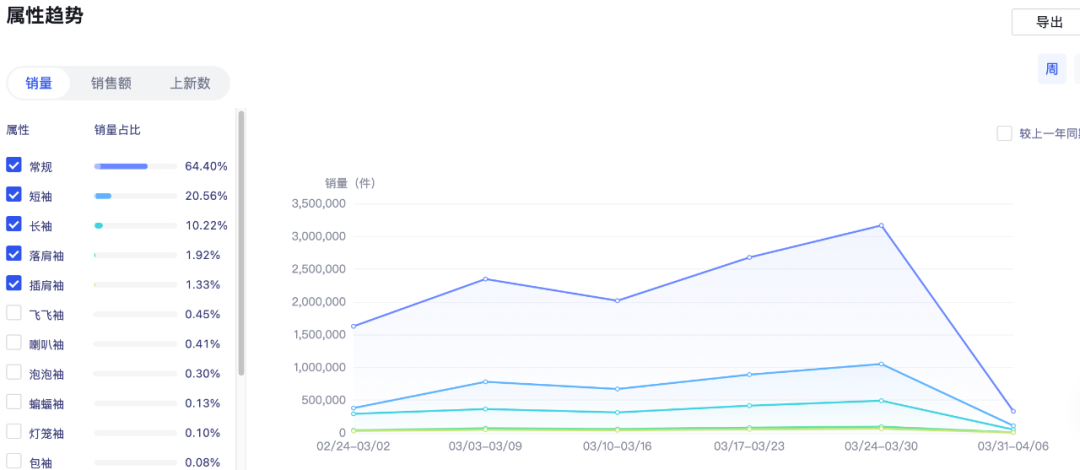
For example, in the winter of 2024, Zhiyi Big Data found that the proportion of puff sleeves as a hot-selling element in women's spring and autumn tops continued to decline, while the proportion of 'batwing sleeves' and 'raglan sleeves' increased. Brands can adjust their designs in time and launch multiple batwing sleeve products. Zhiyi Technology observed that ONLY, in just its single Tmall flagship store, produced multiple batwing sleeve items each selling over 1,000 units.
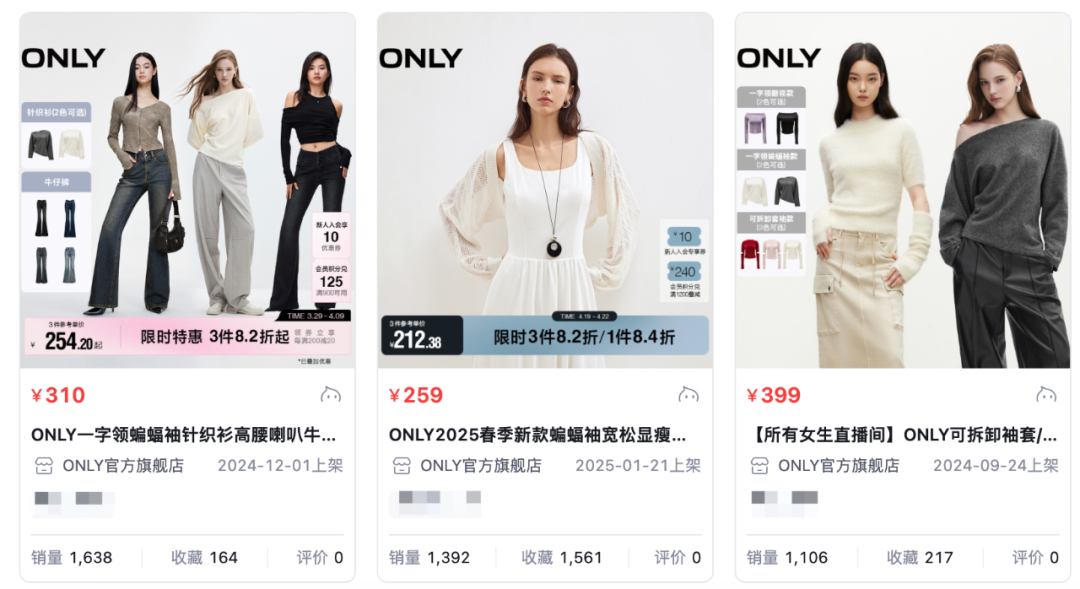
Using fashion big data as the basis for launching styles and consumer reviews as the guide for modifying designs, this new product logic driven by consumer needs helps ONLY capture the hearts of young consumers more quickly and accurately.
03 Social Media Insights: Established Brands Accurately Targeting 'New' Customer Groups
Once its main battleground was the shelf e-commerce platform ONLY, in recent years it has actively expanded into content e-commerce platforms represented by Douyin, following the shift in shopping channels of young consumers.Using Zhiyi's DouYi products, brands can quickly build a 'popularity-to-conversion' model for content e-commerce platforms.。
In addition to its own e-commerce section, the Douyin platform provides important directional reference for brands in selecting products through its content section. By using the filtering function in the DouYi content library, brands can combine filters based on influencer characteristics, content features, product design style elements, fan characteristics, and other criteria to select popular and highly liked videos related to their product categories, understand the dressing styles of influencers in that category and user feedback, and capture trends on social media.
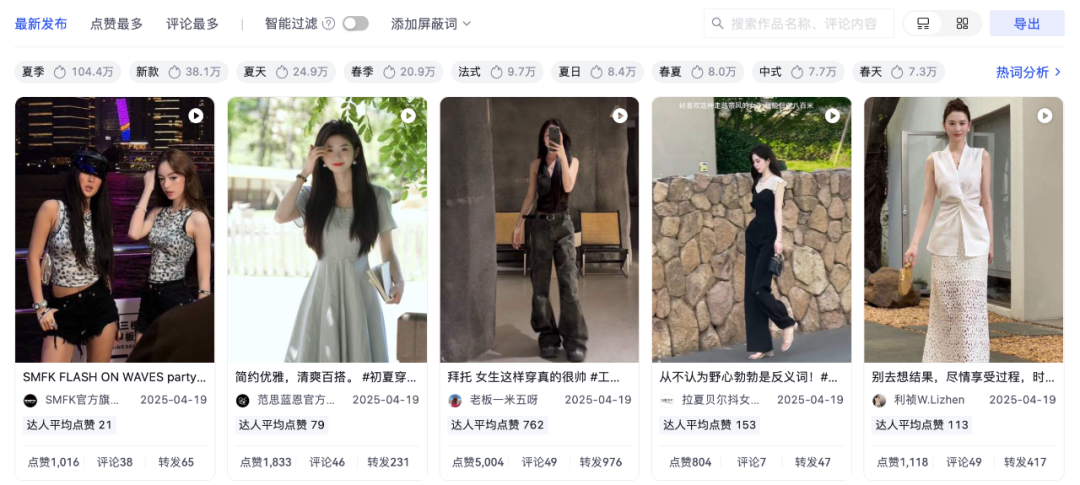
For example, in the autumn of 2024, ONLY captured the 'old money style' topic with rapidly increasing reading volume and hot-selling product numbers, quickly collaborating with influencers to launch a 'budget old money style' outfit tutorial, with video views exceeding 20 million, driving a month-on-month sales increase of 65% for related products.
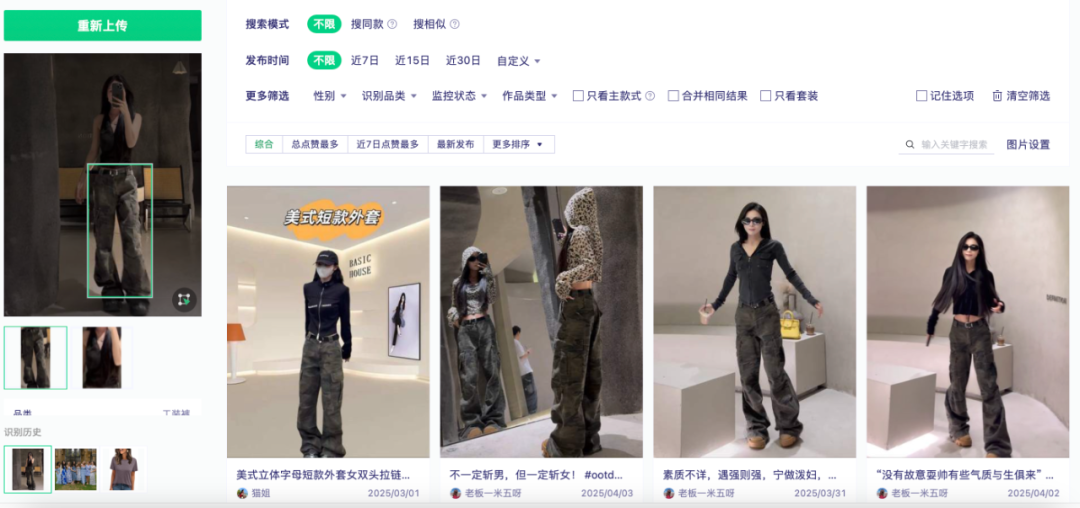
In addition,Through the 'Smart Image Search' function, you can also search for similar items across the web for clothing outfits and products featured in short videos, and analyze the popular design elements of these products.。
Amid the wave of digitalization, ONLY has not blindly chased traffic, but has used the 'Zhi Yi' big data as a navigator to find a balance between adhering to brand philosophy and innovating new products.
This strategy of being 'slow within fast' may become a new paradigm for the fashion industry to cope with uncertainty. Now, with the maturity of technologies such as AI-generated design, the methodology for product selection by fashion brands continues to evolve, but the core logic remains the same: use data as a measure to gauge every inch of consumer demand.
· END ·
